
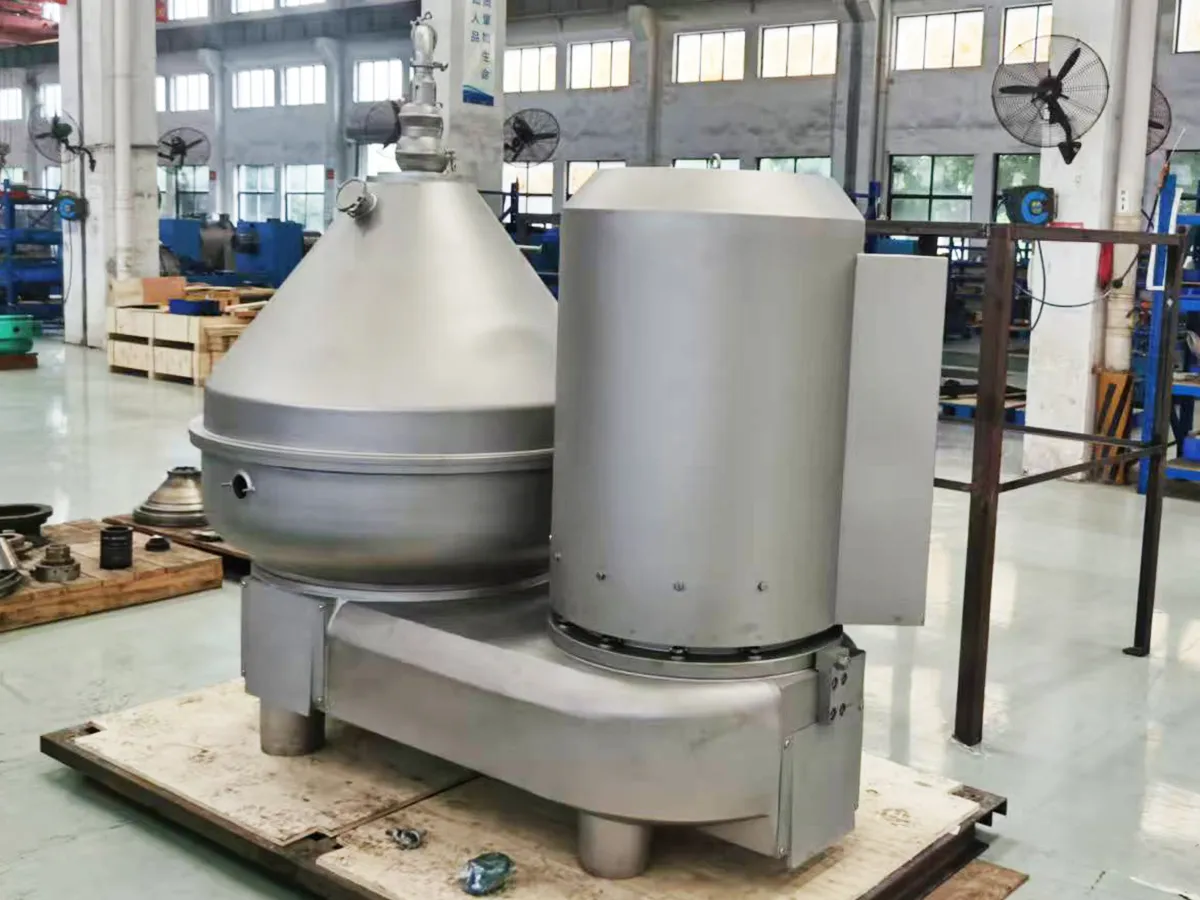
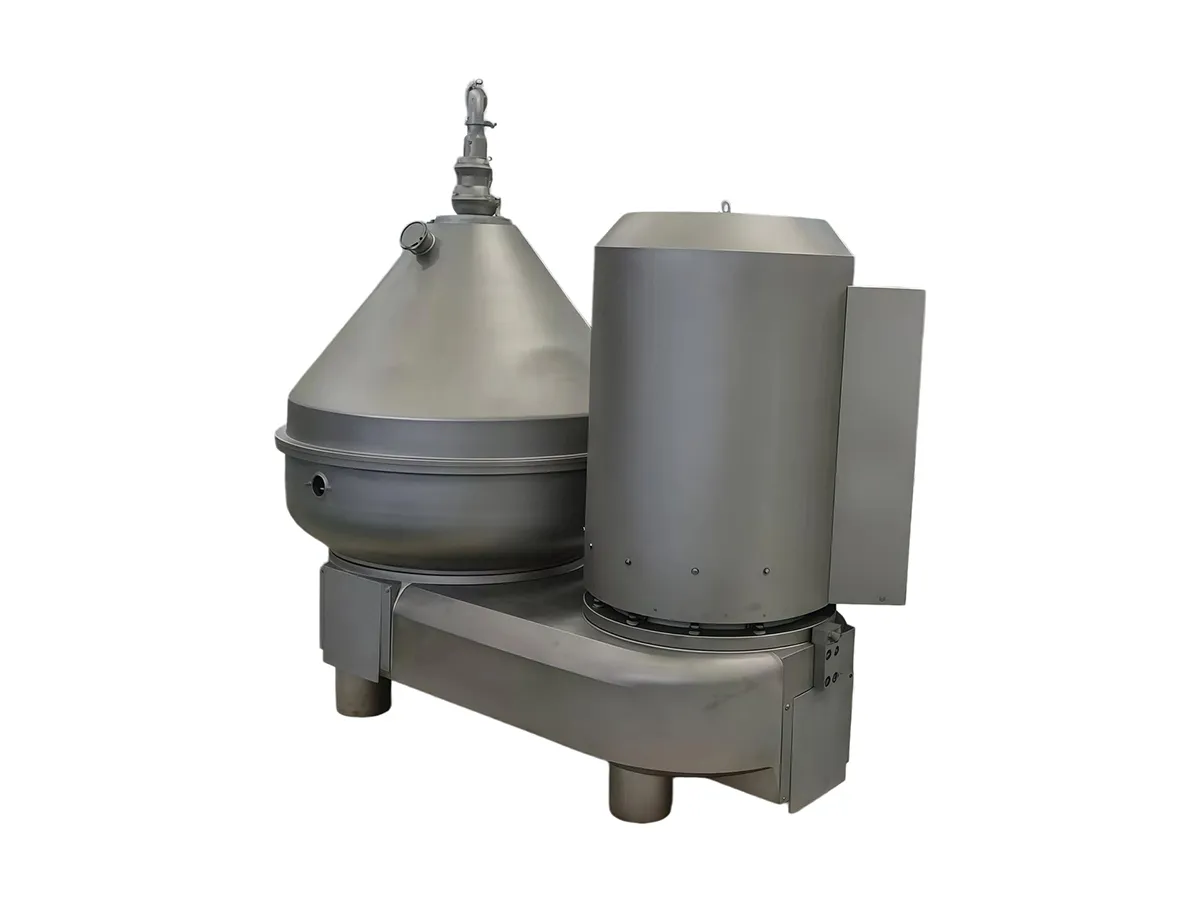
Self-Cleaning Disc Stack Centrifuge
Two-Phase Centrifuges, Three-Phase Centrifuges
- Bowl Diameter (mm) 350-730
- Max. Speed (r/min) 4,300-7,200
- RCF (relative centrifugal force) 7,205-10,886
- Capacity (t/h) ≤2-≤30
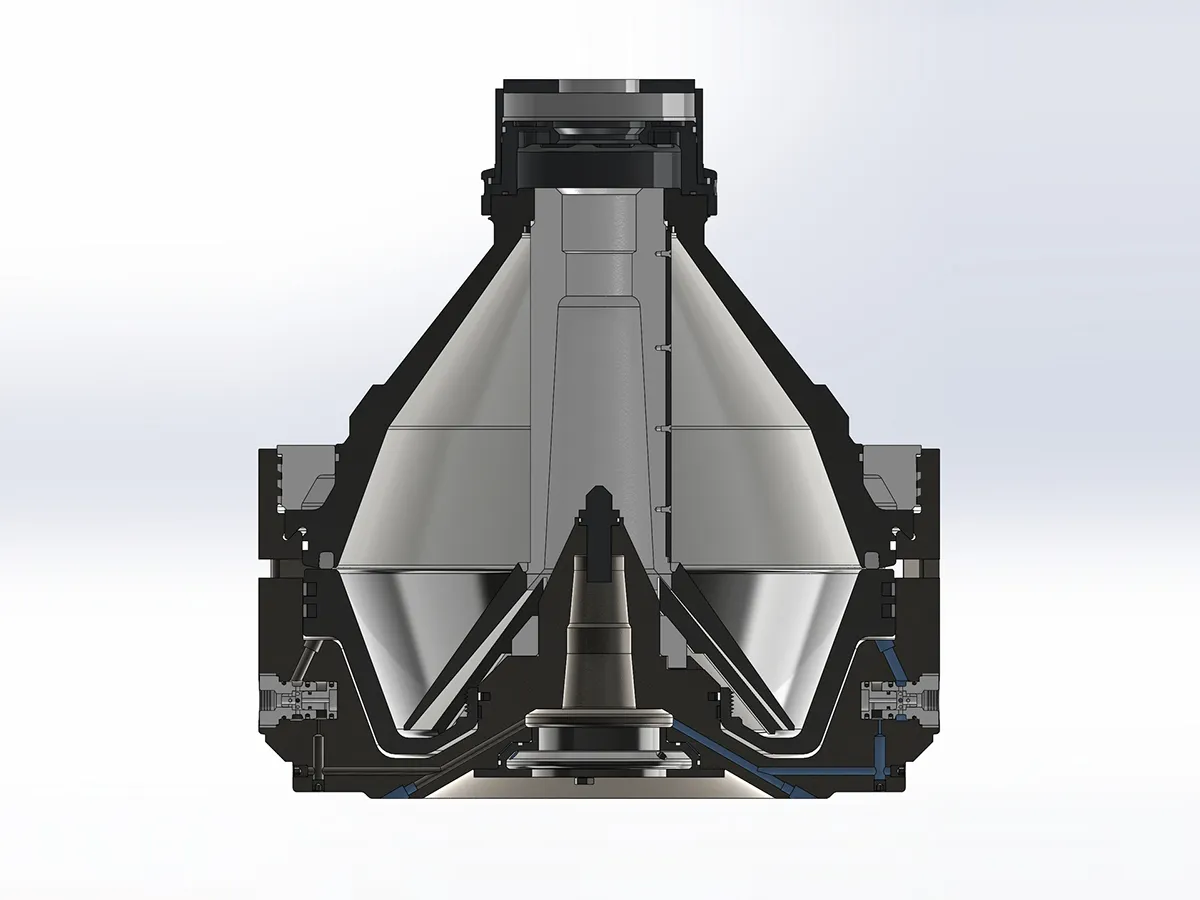
The self-cleaning disc stack centrifuge is an industrial centrifuge that is equipped with an automatic solids-discharging bowl that utilises a series of slide-valve sealing structures. The slide-valve action is regulated by a PLC, which causes the discharge ports at the piston to briefly open in order to eject the settled solids. The ports then automatically reset, eliminating the necessity to stop the machine. The type is offered in two versions: liquid-solid two-phase separation and liquid-liquid-solid three-phase separation. The material is in direct contact with all components, which are constructed from stainless steel, resulting in a long service life and robust corrosion resistance.
| Model | |
|
|
| Bowl Diameter (mm) | 350 | 440 | 730 |
| Max. Speed (r/min) | 7,200 | 7,200 | 4,300 |
| RCF (relative centrifugal force) | 10,886 | 12,900 | 7,205 |
| Motor Power (kW) | 11 | 22 | 55 |
| Capacity (t/h) | ≤2 | ≤12 | ≤30 |
| Overall Dimensions (mm, L*W*H) | 1,273*843*1,500 | 1,670*1,250*1,350 | 2,350*1,780*2,050 |
| Machine Weight (kg) | 1,300 | 1,300 | 3,500 |
| Type | Liquid-Liquid-Solid Separation | Liquid-Liquid-Solid Separation | Liquid-Liquid-Solid Separation |
- Biopharmaceuticals and Fermentation: Cell separation, yeast recovery, and antibiotic extraction in fermentation-broth trials, pilot runs, and large-scale production.
- Food and Natural Products: Large-scale juice clarification, beer wort separation, and condiment refining, as well as essential-oil extraction, juice refining, and three-phase separation of plant extracts.
- Fine Chemicals and New Materials: Catalyst recovery, separation of product and by-product phases from reaction mixtures, and scale catalyst recovery, suspension concentration, and high-purity product refining.
- Environmental & Resource Recovery: Large-scale sludge concentration, recovery of valuable solids, pretreatment of high-solids industrial wastewater, and rapid oil-water-solid three-phase separation, as well as small-scale oily wastewater treatment.
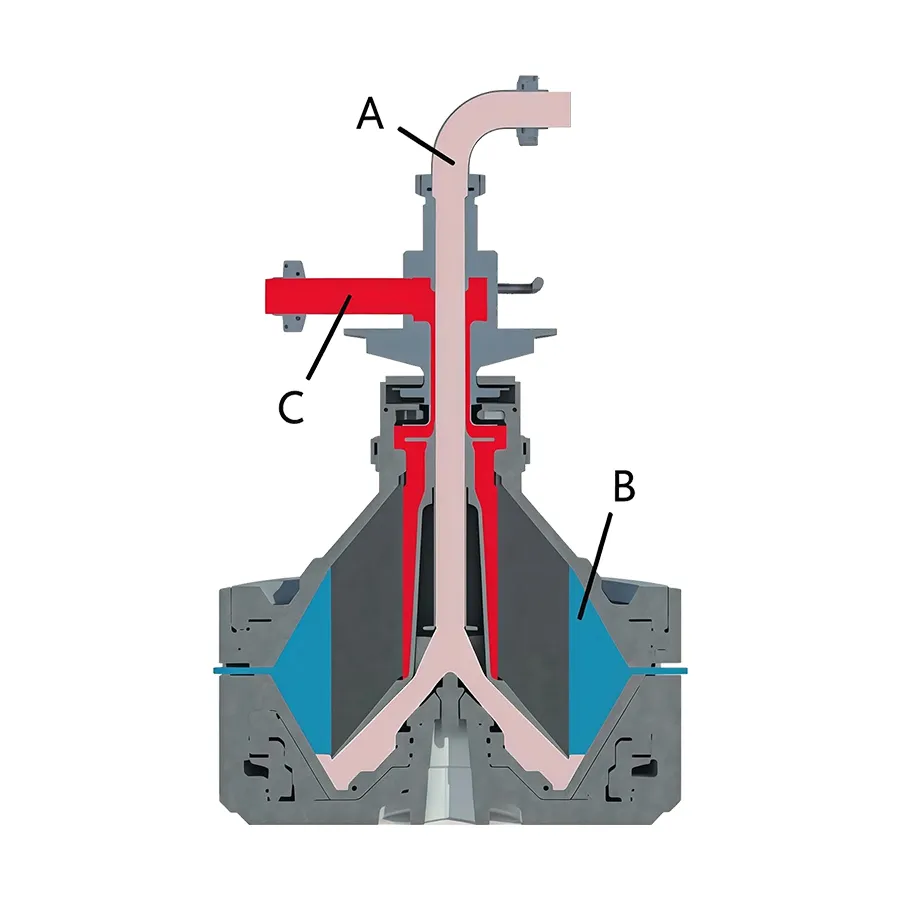
Two-Phase Clarification: Feed liquid that has been treated A enters the bowl through the feed conduit and proceeds through the open feed ports at the base of the feed distributor to the conical disc stack. Solid particles B are ejected from the disc stack, migrate outward along the inner generatrix of the discs, and progressively accumulate on the inner bowl wall in the strong centrifugal field. The clarified liquid C migrates toward the center and ascends into the centripetal pump chamber under centripetal buoyancy. The pump pressure then propels it into the collection pipework. The PLC-controlled piston is responsible for the discharge of the solids that have accumulated on the bowl wall.
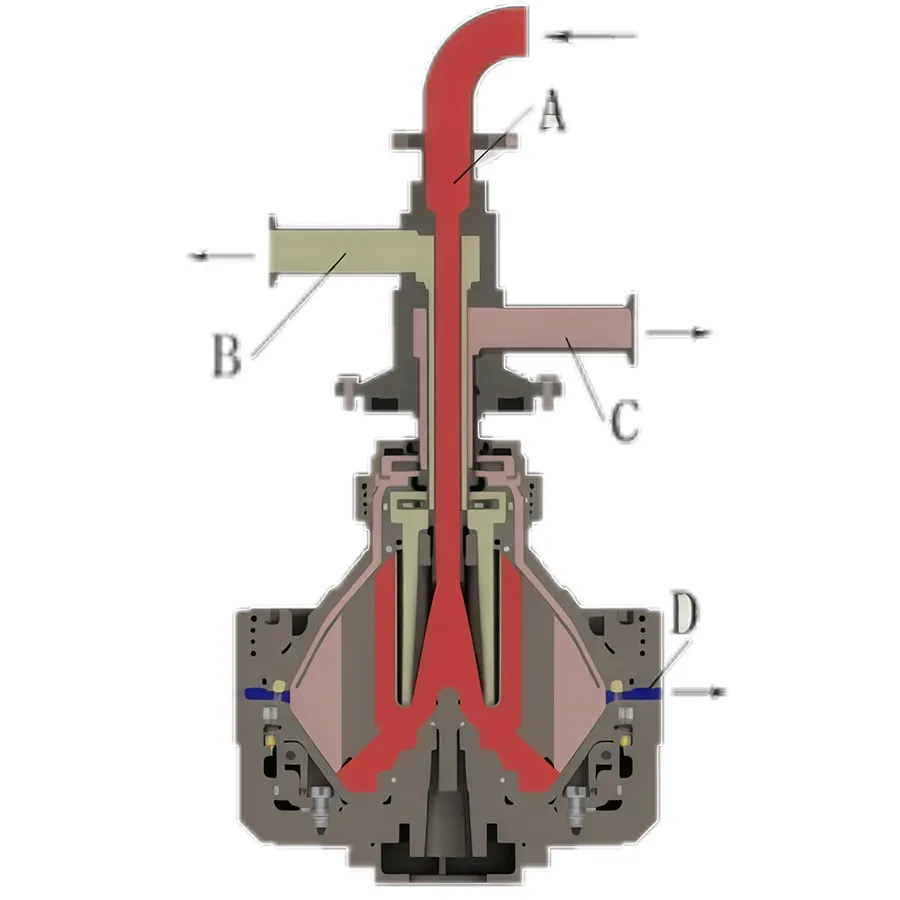
Three-Phase Clarification: Liquid used for feeding A enters the bowl through the feed conduit and proceeds through the feed distributor and the distribution holes of the disc stack to the conical disc stack. Here, materials of varying densities begin to separate due to centrifugal force. The solids settle on the bowl wall, while the heavy-phase liquid ascends through the upper disc and is discharged by the heavy-phase centripetal pump at heavy-phase outlet C. The heavy-phase liquid and solid particles move toward the bowl periphery along the inner side of the discs. The heavy phase displaces the light-phase liquid, which in turn moves inward, ascends through the feed distributor, and is discharged by the light-phase centripetal pump at light-phase outlet B. The PLC-controlled piston discharges the solids that have accumulated on the bowl wall through discharge port D.